
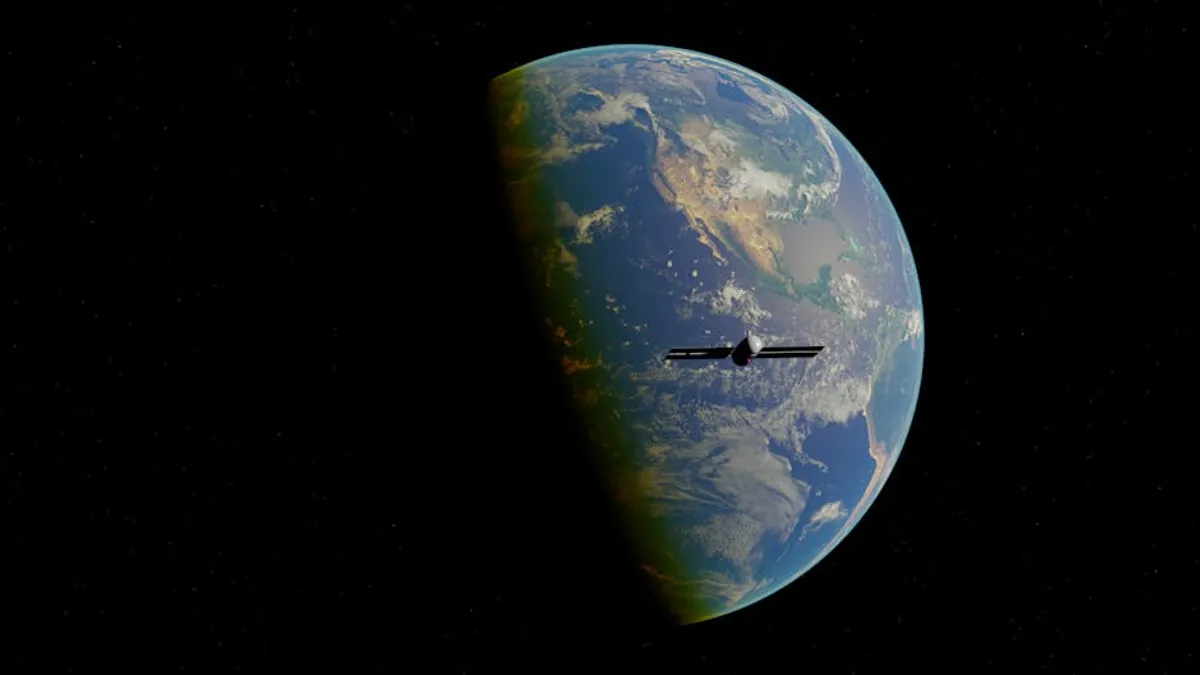
Snap Planets serves as a digital platform for exploring celestial bodies, offering interactive visualizations, real-time tracking, and educational content focused on our solar system and the broader cosmos. Users often turn to Snap Planets for its detailed 3D models of planets, moons, and other astronomical phenomena, alongside features like sky simulation, historical event playback, and a user-friendly interface suitable for both casual observers and educational settings. However, specific project requirements, budget constraints, or a need for specialized functionalities might prompt users to explore alternatives that align more closely with their individual or organizational goals. Evaluating other options ensures access to features like advanced astrophotography planning, deeper scientific data integration, or cross-platform compatibility not precisely matched by Snap Planets.
What to Look For in an Alternative
When evaluating alternatives to Snap Planets, focus on several key areas to ensure the chosen platform meets specific needs. Data accuracy and the fidelity of celestial models are paramount for any serious astronomical application; verify the source and update frequency of astronomical data. Consider the scope of the celestial database—does it cover only the solar system, or does it extend to deep-sky objects, exoplanets, and galaxies with sufficient detail? User interface and ease of navigation are crucial for accessibility, especially for educational purposes or casual stargazing. Look for intuitive controls, clear labeling, and customizable viewing options. Platform compatibility is another practical consideration; determine if the alternative supports desktop operating systems, mobile devices, or web browsers, and if it offers seamless synchronization across devices. For advanced users, features such as telescope control integration, astrophotography planning tools, or scripting capabilities might be essential. Finally, evaluate the pricing model, whether it’s a one-time purchase, subscription, or free with premium add-ons, to ensure it aligns with budgetary allowances and long-term usage plans.
1. Stellarium
Stellarium is a free, open-source planetarium software that renders a realistic sky in 3D, just like what you see with the naked eye, binoculars, or a telescope. It is widely recognized for its high-fidelity sky simulation, offering a vast catalog of stars, nebulae, galaxies, planets, and their moons. Its strength lies in its configurability, allowing users to simulate celestial events, control telescope mounts, and customize the viewing experience with various sky cultures and landscape options. Unlike more guided educational platforms, Stellarium provides a robust, customizable environment for detailed sky observation and planning.
Key Features: Realistic sky rendering, expansive star catalog (over 600,000 by default, expandable to 1.7 billion), deep-sky object visualization, real-time simulation of celestial events, telescope control, custom landscapes and sky cultures, time travel functionality.
Pricing: Free (open-source desktop application); Stellarium Mobile is available as a paid app on iOS and Android.
Best For: Amateur astronomers, educators, and enthusiasts seeking a highly realistic, customizable, and free desktop planetarium software for detailed sky observation and event planning.
Pros:
- Comprehensive and highly accurate sky simulation.
- Extensive catalog of celestial objects, expandable through plugins.
- Open-source nature ensures community support and continuous development.
- Supports telescope control for direct observation.
- Offers rich customization options for viewing environments.
Cons:
- Steeper learning curve for beginners due to the depth of features.
- Mobile version is a paid app, and its feature set differs from the desktop.
- Interface can feel less modern compared to newer, commercial applications.
- Primarily a desktop application, limiting mobile-first users.
2. Star Walk 2
Star Walk 2 is a popular mobile astronomy guide that uses a device's sensors to show real-time positions of stars, constellations, planets, and satellites in the sky. Its augmented reality (AR) mode allows users to point their device at the sky and see overlays of celestial objects. The application is known for its visually appealing graphics and intuitive interface, making it accessible for casual stargazers and those new to astronomy. While it offers a rich visual experience, its depth of scientific data and customization options are generally geared towards ease of use over advanced technical detail. Star Walk 2 is one of several mobile astronomy guides available for download.
Key Features: Real-time sky tracking with AR, 3D models of constellations and celestial bodies, satellite tracking, astronomical calendar, time machine feature, deep-sky object catalog, visually rich graphics.
Pricing: Free with in-app purchases for additional features (e.g., deep-sky objects, extended solar system, ad removal); premium subscription available.
Best For: Mobile users, casual stargazers, and educators seeking an intuitive, visually engaging, and augmented reality-enabled astronomy guide for quick identification of celestial objects.
Pros:
- Excellent augmented reality feature for real-time object identification.
- Highly intuitive and user-friendly interface, ideal for beginners.
- Visually stunning 3D models and graphics.
- Comprehensive database of stars, planets, and satellites.
- Regular updates with new features and content.
Cons:
- Many advanced features are locked behind in-app purchases or a subscription.
- Less depth for scientific research or professional astronomical planning compared to desktop software.
- Relies heavily on mobile device sensors, which can vary in accuracy.
- Limited customization options for advanced users.
3. SkyView Lite
SkyView Lite is another mobile astronomy application that simplifies stargazing by identifying celestial objects overhead using a device's camera. It excels in its simplicity and immediate utility, allowing users to point their phone or tablet at the sky to identify stars, constellations, planets, and satellites. Its "Lite" version provides a foundational set of features, with a full paid version offering expanded content and capabilities. SkyView focuses on direct, interactive identification without the extensive simulation or data analysis tools found in more complex platforms.
Key Features: Augmented reality sky identification, satellite tracking, deep-sky object catalog, time travel functionality, night mode, social sharing.
Pricing: Free (Lite version with core features); SkyView Full is a one-time purchase for expanded content and ad removal.
Best For: Beginners, casual observers, and families looking for a straightforward, easy-to-use mobile app to identify objects in the night sky quickly.
Pros:
- Extremely easy to use, point-and-identify functionality.
- Effective augmented reality feature for immediate sky recognition.
- Good for quick identification of common celestial objects.
- Night mode preserves night vision.
- Affordable one-time purchase for the full version.
Cons:
- Limited in-depth scientific data or advanced simulation features.
- Free version includes ads and has restricted content.
- Less customizable compared to more robust planetarium software.
- Primarily a mobile experience, lacking a desktop counterpart.
4. Celestia
Celestia is a free 3D astronomy program that allows users to explore the universe in three dimensions. Unlike traditional planetarium software that projects the sky onto a sphere, Celestia enables travel through space, from Earth's surface to the far reaches of the cosmos. Users can visit planets, moons, asteroids, and even distant stars and galaxies, experiencing their true spatial relationships. Its strength lies in its ability to simulate interstellar travel and visualize the universe on a grand scale, making it a unique educational and exploratory tool.
Key Features: 3D real-time space simulation, ability to travel anywhere in the universe, extensive catalog of celestial objects (expandable), support for add-ons, historical event simulation, detailed planetary textures.
Pricing: Free (open-source desktop application).
Best For: Users interested in exploring the universe in 3D, educators demonstrating spatial relationships in astronomy, and those seeking a free, expansive space simulator for educational or recreational purposes.
Pros:
- Unique 3D travel experience through the entire universe.
- Highly detailed models and textures for planets and other objects.
- Open-source with a large community and extensive add-on support.
- Excellent for visualizing cosmic distances and relationships.
- Completely free with no hidden costs.
Cons:
- Interface can feel dated and less intuitive than commercial alternatives.
- Requires a dedicated graphics card for optimal performance.
- Focuses more on spatial exploration than real-time sky observation from Earth.
- Development pace can be slower due to its open-source nature.
5. WorldWide Telescope
WorldWide Telescope (WWT) is a free, open-source astronomy visualization software that functions as a virtual telescope, planetarium, and observatory. Developed by Microsoft Research and now managed by the American Astronomical Society, WWT integrates astronomical data from various sources, including NASA, ESA, and ground-based telescopes, to create a seamless, interactive view of the universe. It is particularly strong in its ability to stitch together images from multiple observatories, offering rich, high-resolution views of distant galaxies and nebulae, alongside robust educational content and tour creation tools.
Key Features: Multi-wavelength sky visualization, integration of professional astronomical data, virtual tours and guided experiences, telescope control, 3D solar system exploration, cross-platform web client.
Pricing: Free (open-source desktop and web application).
Best For: Educators, researchers, and advanced enthusiasts who need a powerful tool for visualizing and analyzing professional astronomical data, creating educational tours, and exploring the universe across multiple wavelengths.
Pros:
- Integrates vast amounts of professional astronomical data for accurate visualization.
- Excellent for multi-wavelength astronomy and deep-sky object exploration.
- Supports creation of guided tours and educational content.
- Available as a desktop client and a web application for broader access.
- Completely free and open-source, backed by a scientific organization.
Cons:
- Can be resource-intensive, requiring a capable computer.
- User interface might be less intuitive for casual users compared to simpler apps.
- Focuses more on data visualization and exploration than simple sky identification.
- Initial setup and data downloads can take time.
6. SpaceEngine
SpaceEngine is a unique 3D universe simulator that allows users to explore a procedural universe on a massive scale, from planetary surfaces to galactic clusters. Unlike other planetarium software that primarily uses real astronomical data, SpaceEngine generates vast numbers of planets, stars, and galaxies using procedural algorithms, blending real data with simulated environments. This approach allows for virtually limitless exploration, offering a sense of scale and discovery unmatched by tools limited to known astronomical objects. It is particularly valued for its stunning graphics and realistic physics simulations.
Key Features: Procedural universe generation, real astronomical data integration, seamless transitions from ground to space, realistic graphics and physics, customizable environments, virtual reality support.
Pricing: Paid (one-time purchase on platforms like Steam); previously free, but now a commercial product with ongoing development.
Best For: Enthusiasts, gamers, and educators who desire a highly realistic, procedurally generated universe for exploration, discovery, and visualization, especially those with VR capabilities.
Pros:
- Offers virtually infinite exploration of a procedurally generated universe.
- Exceptional graphical fidelity and realistic physics simulations.
- Seamless transitions from planetary surfaces to interstellar space.
- Supports virtual reality for an immersive experience.
- Combines real astronomical data with simulated objects.
Cons:
- Requires a powerful computer with a dedicated graphics card for optimal performance.
- Large file size and potentially long download times for high-resolution assets.
- Steeper learning curve due to the complexity of its simulation.
- Primarily a standalone application, not web-based or mobile.
7. Google Sky in Google Earth
Google Sky, integrated within Google Earth, offers a unique way to explore the universe by allowing users to view celestial objects from Earth and beyond. It overlays images from various telescopes and observatories onto a navigable 3D globe, similar to how Google Earth maps the Earth's surface. Users can zoom in on distant galaxies, nebulae, and star clusters, explore the solar system, and view historical sky maps. Its strength lies in its accessibility and the familiar Google Earth interface, making it an easy entry point for broad astronomical exploration without specialized software.
Key Features: Integrated within Google Earth, access to vast astronomical imagery, solar system exploration, historical sky maps, constellation overlays, ability to search for specific objects.
Pricing: Free (as part of Google Earth, which is free).
Best For: Casual explorers, students, and users already familiar with Google Earth who want an accessible, free tool for broad astronomical visualization and exploration without needing dedicated astronomy software.
Pros:
- Extremely accessible and easy to use for anyone familiar with Google Earth.
- Integrates a large collection of astronomical images from professional sources.
- Allows for exploration of both the night sky and the solar system.
- Completely free with no hidden costs or subscriptions.
- Cross-platform availability through Google Earth Pro desktop and web versions.
Cons:
- Less specialized and detailed than dedicated astronomy software.
- Lacks real-time tracking, telescope control, or advanced simulation features.
- Primarily an image viewer rather than a dynamic simulator.
- Updates and new features are tied to Google Earth's development cycle.
How to Choose the Right Alternative
Selecting the appropriate alternative to Snap Planets hinges on aligning the tool's capabilities with your specific astronomical interests and technical requirements. For those prioritizing visual accuracy and extensive customization for detailed sky observation and event planning, Stellarium offers a robust, free desktop solution. Mobile-centric users who value intuitive interfaces and augmented reality for quick object identification might find Star Walk 2 or SkyView Lite more suitable, though they involve in-app purchases for full functionality. If your interest lies in exploring the universe in 3D and understanding spatial relationships on a grand scale, Celestia provides a free, open-source platform for interstellar travel simulation. Educators and researchers requiring powerful data visualization and the ability to create guided tours from professional astronomical data will benefit from WorldWide Telescope. For an immersive, procedurally generated universe with stunning graphics and VR support, SpaceEngine stands out, albeit with a higher system requirement and a purchase cost. Finally, for casual exploration within a familiar interface, Google Sky in Google Earth offers an accessible, free entry point to astronomical imagery without the complexity of specialized software. Evaluate each option based on your primary use case—be it casual stargazing, educational instruction, advanced astrophotography planning, or deep space exploration—and consider your budget, platform preference, and desired level of scientific detail.
FAQ
Q: Are these alternatives suitable for astrophotography planning?
A: Stellarium and WorldWide Telescope offer features that assist with astrophotography planning, such as object tracking, field of view simulation, and event prediction. Mobile apps like Star Walk 2 can help identify targets but generally lack advanced planning tools.
Q: Can these tools be used offline?
A: Most desktop applications like Stellarium, Celestia, and SpaceEngine can function offline once their core data is downloaded. Mobile apps like Star Walk 2 and SkyView Lite typically require an initial internet connection for data and updates, but many core features can work offline. Google Sky, being web-dependent, requires an internet connection.
Q: Do any of these alternatives offer telescope control?
A: Stellarium and WorldWide Telescope both support direct telescope control, allowing users to slew their computerized telescopes to specific celestial objects through the software.
Q: What is the best free alternative for beginners?
A: For mobile users, SkyView Lite offers a very simple, point-and-identify experience. For desktop users, Stellarium provides a comprehensive free experience, though it has a slightly steeper learning curve than basic mobile apps. Google Sky in Google Earth is also highly accessible for broad exploration.
Q: How accurate is the data in these astronomy applications?
A: The accuracy varies. Tools like Stellarium and WorldWide Telescope integrate professional astronomical catalogs and data, ensuring high precision. Mobile apps generally use reliable, publicly available data but might have less granular detail. Procedural generators like SpaceEngine blend real data with simulated elements, so while visually stunning, some objects are scientifically generated rather than observed.